
Crises Deepen, Budgets Shrink: 10 Countries With Biggest Drops in Relief Aid
From 2025 - 2026, massive funding cuts forced UN agencies and NGOs to drastically cut life saving programs. Here's where cuts were the worst.
By Geno Teofilo
5/28/20263 min read
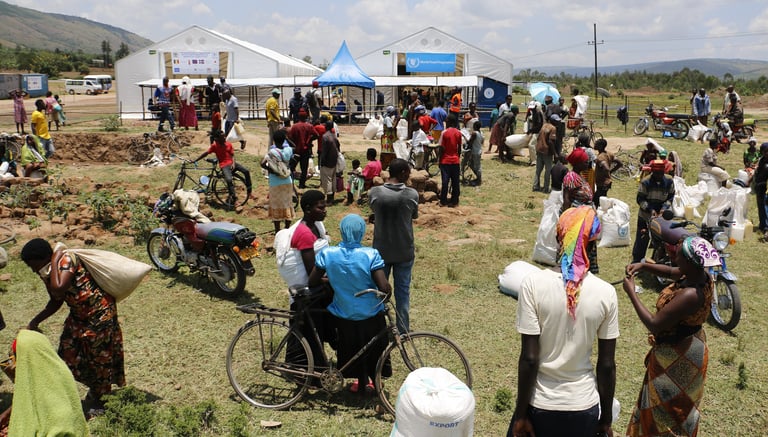
As multiple crises and conflicts (wars) have been headlining the news this year, it has been an alarming trend to see response budgets for NGOs and UN agencies shrink. This has had tragic consequences for civilians on the ground, who rely on relief aid and foreign funded programs for their very survival.
Comparing aid budgets from 2025 to 2026, how bad have been the reductions in humanitarian aid? For many countries, the aid cuts for these crises were massive. The below statistics were tabulated with data from the Financial Tracking Service, posted by United Nations OCHA (Office for Coordination of Humanitarian Affairs).
Here are the 10 countries in crisis, that have been affected the worst by those funding cuts.
1. Occupied Palestinian Territory (Flash Appeal)
2025 Funding: $2,681.0 million ($2.68 billion)
2026 Funding: $562.8 million
Percent Change: -79.0%
Funding Drop: $2.11 billion
2. Ukraine (Humanitarian Needs and Response Plan)
2025 Funding: $1,718.6 million ($1.72 billion)
2026 Funding: $983.9 million
Percent Change: -42.7%
Funding Drop: $734.7 million
3. Sudan (Humanitarian Needs and Response Plan)
2025 Funding: $1,657.0 million ($1.66 billion)
2026 Funding: $1,059.0 million
Percent Change: -36.1%
Funding Drop: $598 million
4. Syrian Arab Republic (Humanitarian Response Priorities Appeal)
2025 Funding: $1,369.5 million ($1.37 billion)
2026 Funding: $843.9 million
Percent Change: -38.4%
Funding Drop: $525.6 million
5. Yemen (Humanitarian Needs and Response Plan)
2025 Funding: $719.9 million
2026 Funding: $315.9 million
Percent Change: -56.1%
Funding Drop: $404 million
6. South Sudan (Humanitarian Needs and Response Plan)
2025 Funding: $777.7 million
2026 Funding: $431.1 million
Percent Change: -44.6%
Funding Drop: $346.6 million
7. Somalia (Humanitarian Needs and Response Plan)
2025 Funding: $411.6 million
2026 Funding: $124.3 million
Percent Change: -69.8%
Funding Drop: $287.3 million
8. Democratic Republic of the Congo (Humanitarian Needs and Response Plan)
2025 Funding: $713.6 million
2026 Funding: $474.9 million
Percent Change: -33.4%
Funding Drop: $238.7 million
9. Afghanistan (Humanitarian Needs and Response Plan)
2025 Funding: $489.0 million
2026 Funding: $261.9 million
Percent Change: -46.4%
Funding Drop: $227.1 million
10. Lebanon (Flash Appeal / Response Plan)
2025 Funding: $297.2 million
2026 Funding: $181.3 million
Percent Change: -39.0%
Funding Drop: $115.9 million
The above totals include funding for all of 2025, while 2026 is not yet half finished. Historically speaking, it is likely that these countries will receive some additional aid funding before the end of the year. However the amount added later this year, is still likely to fall far short of the urgent humanitarian relief needs of the families in crisis.
This is especially true given that global inflation is higher this year. More than usual, inflation is squeezing foreign aid budgets of donor countries. Additionally, last year were the Trump – Musk cuts to US government foreign aid. This also lead to major reductions of life saving programs globally, for countries in crisis.
Looking within the data, some countries lower on the list, lost a higher percentage of their funding, than other countries that lost more funding in dollars. For example: the Somalia Humanitarian Needs and Response Plan, dropped $287.3 million from the previous year, placing it at number 7 on the list. But the funding percentage drop was – 69.8%, only 2nd worst. The worst percentage drop was to the Occupied Palestinian Territory Flash Appeal, which was – 79%.
For the Democratic Republic of the Congo, aid funding is likely to increase in the coming weeks. Besides the long running conflict and humanitarian crisis in the east of the country, there is now a new outbreak of Ebola in the same area. So more funding and emergency medical relief and will be sent there soon.
Notably absent in this list, is the USA – Iran conflict. Since this conflict began in 2026, there wasn’t funding or data for this in 2025, so it is not included in this report.
It should be noted, that these 10 countries and the funding data, do not include the many other countries in crisis, which did not have funding decreases as high as these 10. (Nigeria, Myanmar, and many others.) There are currently zero countries in crisis in the world, that have sufficient funding for humanitarian response programs.
It should be noted, that these 10 countries and the funding data, do not include the many other countries in crisis, which did not have funding decreases as high as these 10. (Nigeria, Myanmar, and many others.) There are currently zero countries in crisis in the world, that have sufficient funding for humanitarian response programs.
Humanitarians and families in crisis will continue to hope, that additional funding from governments and major donors will be made available for these, and other, countries in crisis.